For domestic workers, understanding and speaking even a little Arabic makes daily life at home far easier, calmer and more comfortable. It helps you follow instructions correctly, ask questions when you are unsure, and — most importantly — build a warm, trusting relationship with the family you work with. When communication is clear, misunderstandings shrink, stress goes down, and daily life becomes far more pleasant for everyone.
This guide focuses on the everyday household Arabic that comes up most — around cooking, cleaning, shopping, childcare and simple, kind communication — all written with easy transliteration so you can start using it today.
Everyday greetings and politeness
Warm, polite phrases set the tone for the whole day and show respect and care. Begin with these:
- sabah al-khayr — good morning
- masa al-khayr — good evening
- shukran — thank you
- afwan — you're welcome / excuse me
- min fadlik — please
- tamam / zayn — okay / good
Around the house
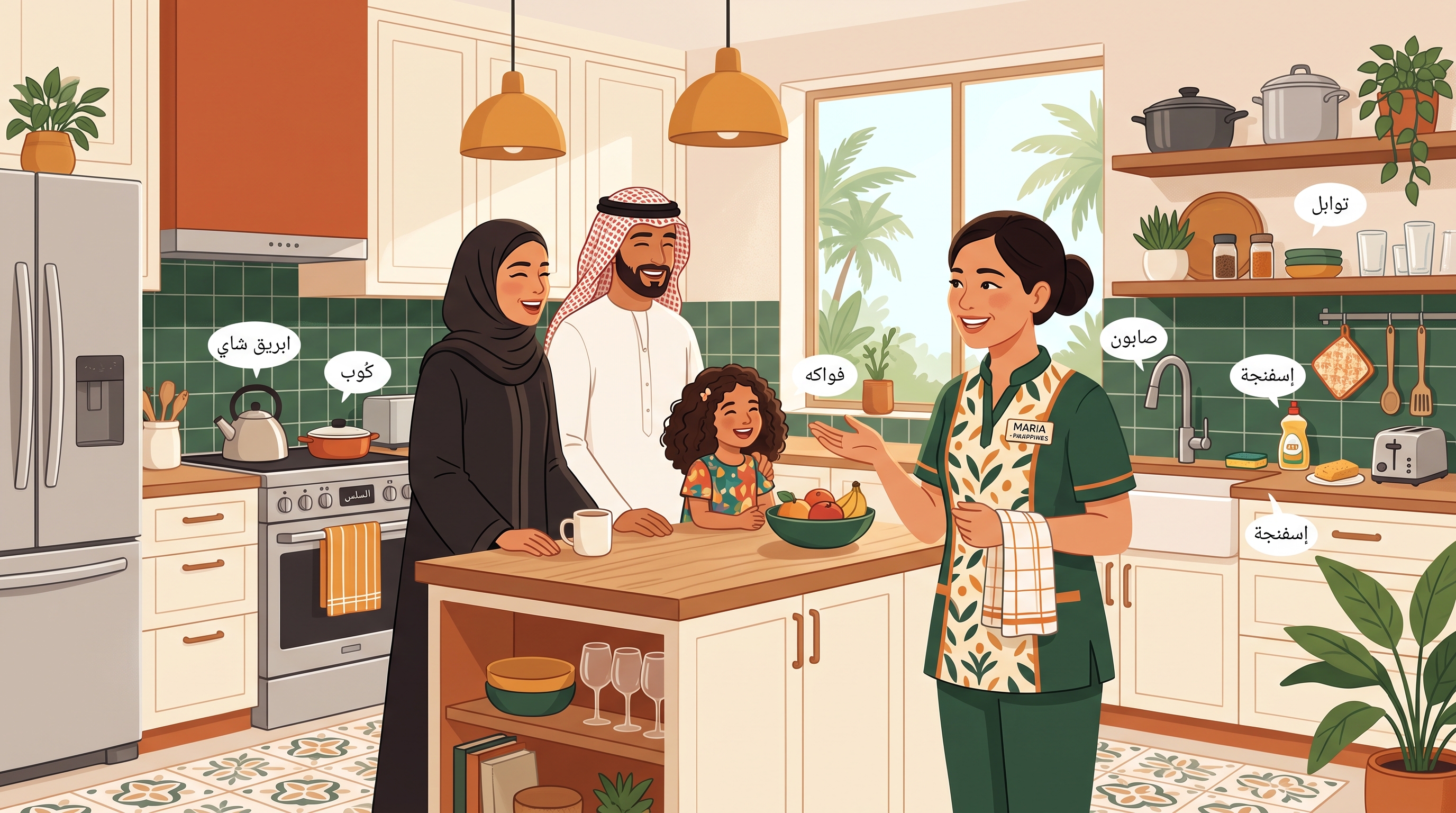
Knowing the words for common tasks and items lets you confirm exactly what is needed. This avoids misunderstandings and shows you are attentive and reliable:
- nadhif — clean
- atbukh — cook
- aghsil — wash
- matbakh — kitchen
- ghurfa — room
- akil — food
- moya — water
- malabis — clothes
- khalas — finished / done
Cooking and shopping
Meals and groceries are a big part of the day. A few phrases make preparing food and buying it much smoother:
- shu tabbin al-yawm? — what would you like today? (talking about food)
- abi ashtari… — I want to buy…
- khubz — bread
- laham / dajaj / samak — meat / chicken / fish
- khudhar / fawakih — vegetables / fruit
- kam? — how much?
Childcare phrases
If you look after children, gentle, clear phrases help you care for them and reassure the parents:
- ta'al / ta'ali — come (to a boy / girl)
- yalla — let's go / come on
- intabih — be careful
- tayyib? — are you okay?
- waqt al-akil — time to eat
- waqt al-nawm — time to sleep
Asking and confirming clearly
The most valuable skill is being able to check that you have understood, kindly and confidently. These small phrases prevent almost all misunderstandings:
- mumkin? — is it okay / may I?
- fahimt — I understood
- ma fahimt — I didn't understand
- marra thanya, min fadlik — again, please
- khalas, sawaytu — done, I finished it
Building a warm relationship
Clear communication does more than get tasks done — it builds trust, and trust makes daily life much easier and kinder for everyone in the home. Families notice and deeply appreciate the effort when you learn their language, even a little. It changes how you are treated and turns a job into a genuine relationship.
The gentlest way to build these phrases is to practice them out loud, a little each day. An AI voice tutor like YalloTutor lets you rehearse exactly these household and childcare phrases in private, hear the correct pronunciation, and grow your confidence before you use them at home — so when the moment comes, the words are already there.
Practice speaking Arabic today
YalloTutor is your personal AI voice tutor. Have real conversations, hear the pronunciation, and see every phrase written out — right on your phone.
Get the app