Moving to the Gulf for work is a huge step, and one thing quickly becomes clear: even a few words of Arabic make daily life dramatically easier. The taxi is smoother, the shop is friendlier, your colleagues warm to you, and a hundred little moments of stress simply disappear. The great news is that you do not need years of classes or a university course to get there. Spoken Gulf Arabic — the everyday dialect used in Qatar, the UAE, Saudi Arabia, Kuwait, Bahrain and Oman — can be learned surprisingly fast when you focus on the right things.
This guide is written for busy expat workers who want practical results, not perfect grammar. We will cover exactly what to learn first, what to safely ignore for now, and how to reach your first real conversation in weeks rather than years.
Start with speaking, not the alphabet
The single biggest mistake beginners make is starting with the Arabic script. Reading and writing are genuinely useful skills — eventually — but at the start they slow you down and are not what you need to talk to a taxi driver, a shopkeeper or a colleague. You can hold a real conversation in Gulf Arabic without reading a single Arabic letter.
So focus first on listening and speaking. Learn phrases as sounds you can say out loud, using simple transliteration (Arabic written in English letters) so you can practice from day one. The script can wait until you already feel comfortable talking — at that point it becomes much easier to pick up anyway.
Learn Gulf Arabic, not classical Arabic
There is more than one kind of Arabic, and choosing the wrong one wastes months. The formal Arabic you hear in news broadcasts — Modern Standard Arabic — is not what people actually speak in shops, homes and streets across the Gulf. If you learn only the formal version, you will understand the news but struggle with everyday conversation.
As an expat, you want spoken Gulf Arabic: the practical, everyday dialect people really use. It is warmer, simpler and far more useful for daily life. Make sure whatever you learn from is teaching you this, not textbook Arabic.
Focus on the phrases you will actually use
Instead of memorizing random vocabulary lists, learn full phrases tied to real situations you face every day. A few dozen well-chosen phrases cover the vast majority of daily life. Start with these building blocks:
- marhaba — hello
- shukran — thank you
- min fadlik — please
- na'am / la — yes / no
- kam? — how much?
- wain…? — where is…?
- khudhni ila… — take me to…
- ma afham — I don't understand
Build a simple daily habit
Language sticks through repetition and speaking, not through reading about it once. The fastest learners talk out loud every day, even if only for a few minutes. The trick is to attach practice to something you already do — your commute, a coffee break, or the few minutes before bed — so it becomes automatic.
A simple routine that works: quickly review yesterday's phrases, learn one new phrase, and then have a short spoken conversation using them. Five to ten minutes is plenty. What matters is that you do it most days.
Do not fear mistakes
Many beginners stay silent because they are afraid of getting it wrong. This is the habit that slows people down the most. In reality, people in the Gulf are almost always delighted that you are trying, and they will happily help you. Every mistake you make out loud is a rep that makes the next attempt better. Speaking imperfectly today is how you speak well in a few months.
Use an AI voice tutor to practice speaking anytime
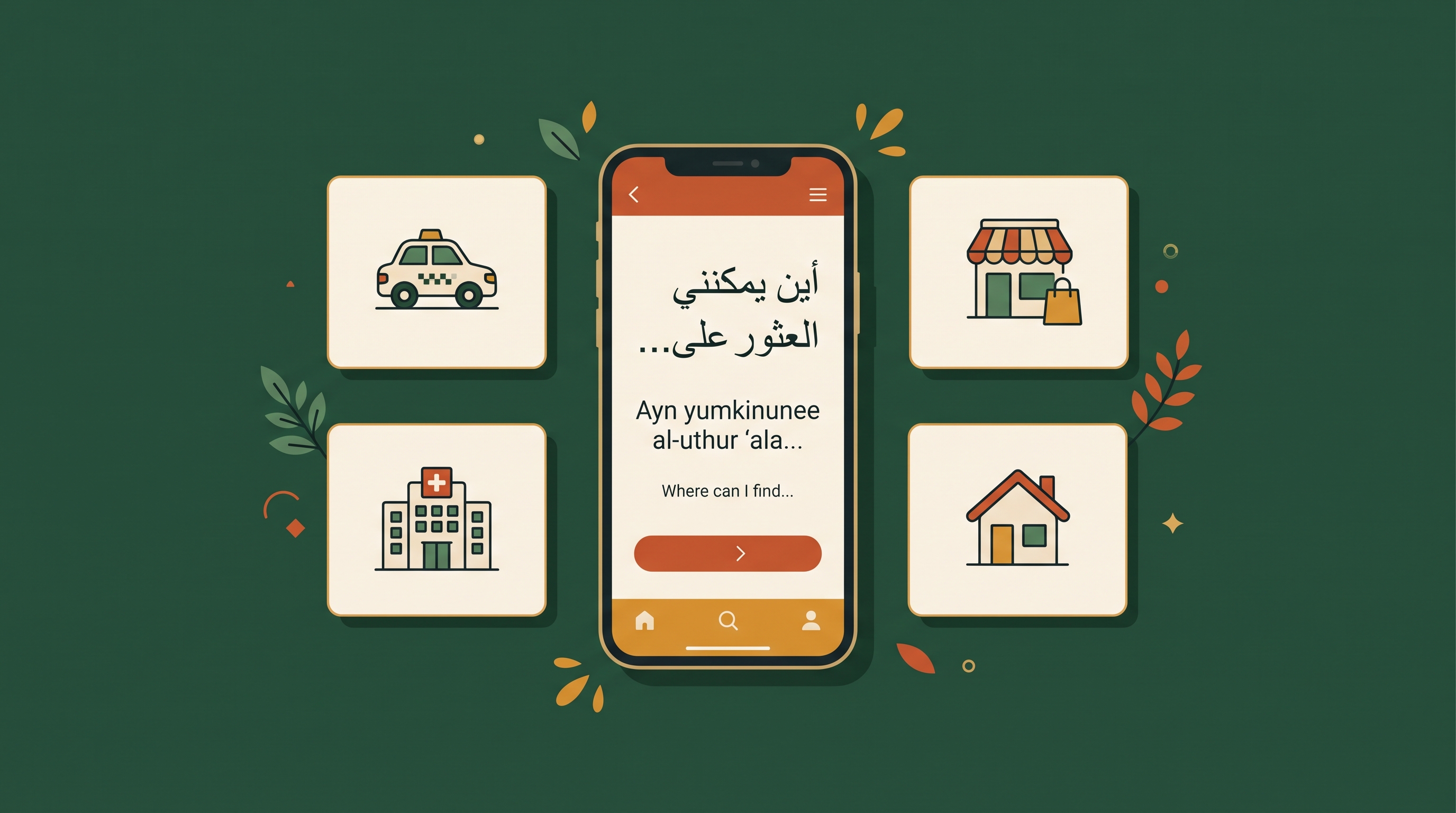
The hardest part of learning to speak is usually finding someone patient to practice with, whenever you have a spare moment. This is exactly where an AI voice tutor changes everything. YalloTutor lets you have real spoken conversations any time — ask how to say something, hear it clearly in Gulf Arabic, see it written with transliteration, and repeat it until it feels natural, with gentle correction on your pronunciation.
It turns the ten spare minutes you already have each day into steady, real practice. Combine that daily habit with the practical focus in this guide, and your first real Arabic conversation is genuinely weeks away, not years.
Practice speaking Arabic today
YalloTutor is your personal AI voice tutor. Have real conversations, hear the pronunciation, and see every phrase written out — right on your phone.
Get the app