New learners are often surprised, and a little frustrated, to discover that there is not just one Arabic. The Arabic you hear in news broadcasts and read in official documents is not quite the Arabic people actually speak in shops, taxis and homes. If you have ever studied some Arabic from a textbook and then found that nobody on the street seemed to talk that way, this is why — and understanding the difference early will save you months of wasted effort.
In this article we will explain the two main forms you will meet — Modern Standard Arabic and Gulf Arabic — in plain terms, and give you a clear, practical answer on which one to focus on first as an expat worker in the Gulf.
What is Modern Standard Arabic?
Modern Standard Arabic, usually shortened to MSA, is the formal, written form of Arabic used across the entire Arab world. It is the language of newspapers, books, official documents, formal speeches and television news. Its great strength is consistency: MSA is essentially the same in Morocco, Egypt, Saudi Arabia and the UAE, which is why it is used for anything official or written.
But here is the crucial point: almost nobody speaks MSA in everyday life. It is nobody's mother tongue. People learn it at school for reading and writing, but they do not chat with friends, bargain at the market or talk to a taxi driver in it. Learning MSA first, in order to handle daily life, is a bit like learning formal, textbook English to hang out with friends — technically correct, but stiff and not how real conversations happen.
What is Gulf Arabic?
Gulf Arabic, sometimes called Khaleeji, is the everyday spoken dialect of the Gulf countries — Qatar, the UAE, Saudi Arabia, Kuwait, Bahrain and Oman. This is the living, breathing language people actually use at home, at work and in the street. It is warmer, faster and often simpler than MSA, with its own everyday words and a relaxed, practical feel.
There are small local differences from country to country and city to city, but Gulf Arabic is broadly shared across the region, so what you learn in Doha will serve you well in Dubai or Riyadh too.
The key differences at a glance
It helps to see the contrast clearly:
- Where it is used — MSA: news, writing, official settings. Gulf Arabic: everyday speech everywhere.
- Who speaks it casually — MSA: almost nobody. Gulf Arabic: everyone, all day.
- How it feels — MSA: formal and consistent. Gulf Arabic: warm, quick and practical.
- Best for — MSA: reading and formal writing. Gulf Arabic: talking to real people in daily life.
Why Gulf Arabic wins for daily life
For an expat worker whose goal is to handle daily life — the taxi, the shop, the clinic, the workplace, the neighbours — Gulf Arabic is clearly the practical choice. It is what the people around you actually use, so every phrase you learn gets used immediately and reinforced constantly. That fast feedback loop is what keeps you motivated and makes progress feel real.
Learning MSA first, by contrast, means studying a formal register you will rarely speak, and then still having to learn the spoken dialect on top of it. For most expats, that is the slow road to a goal they never actually needed.
Do you ever need MSA?
MSA is not useless — far from it. If your goals include reading Arabic fluently, writing formal documents, following the news in depth, or working in media, law or academia, MSA becomes important. The good news is that you can always add it later, and having strong spoken Gulf Arabic first actually makes learning MSA easier, because you already have an ear for the language.
So the sensible path for most expats is simple: build practical spoken Gulf Arabic now, and add formal Arabic later only if and when your goals call for it.
How to start with Gulf Arabic
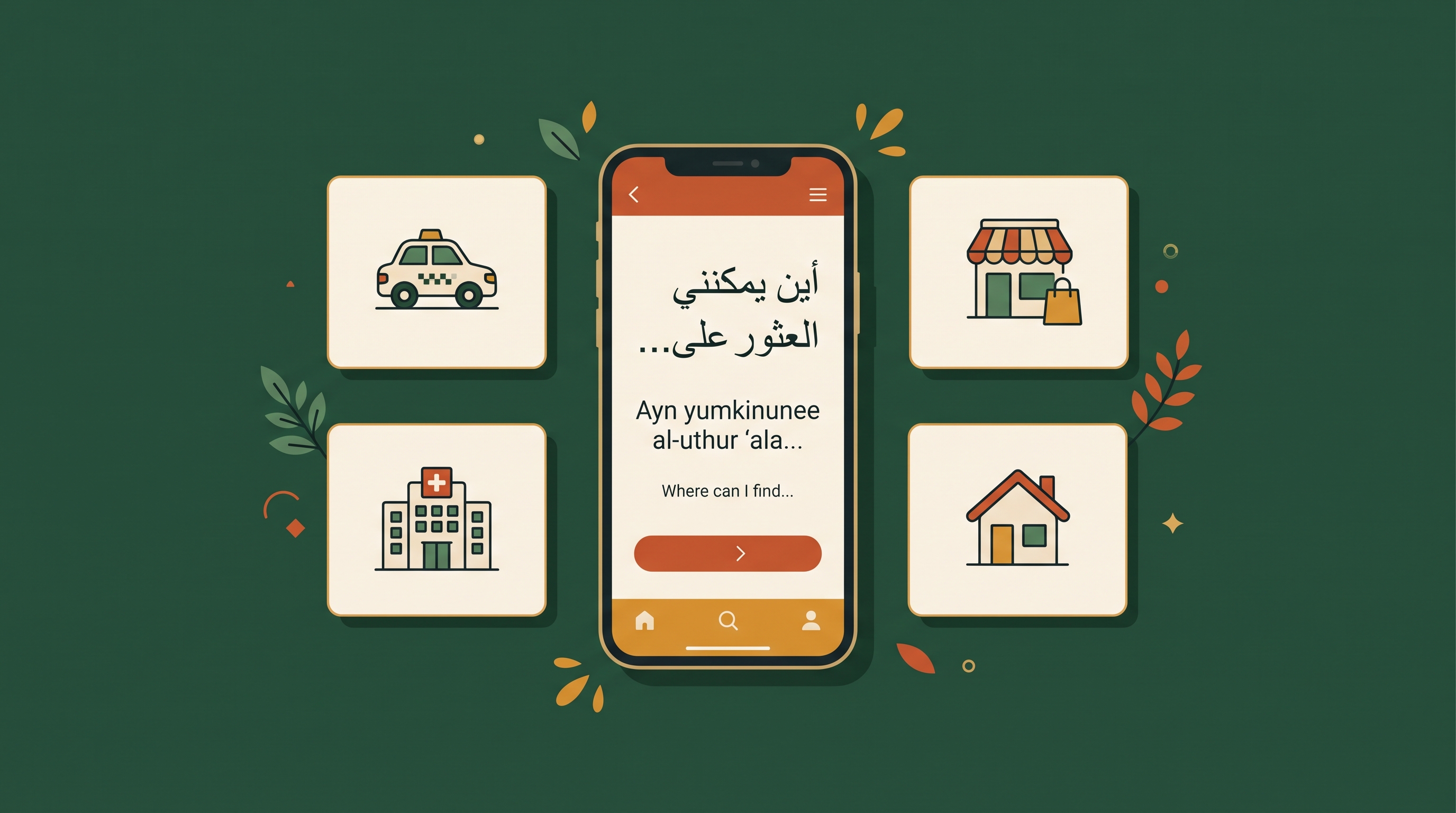
Once you have decided to focus on spoken Gulf Arabic, the fastest way to progress is to practice speaking it every day in real situations. An AI voice tutor like YalloTutor is built for exactly this: it teaches you practical Gulf Arabic, not textbook MSA, and lets you hear the real pronunciation, see phrases written with transliteration, and practice conversations any time. Skip the wasted months learning the wrong Arabic — start with the version people actually speak, and you will feel at home far sooner.
Practice speaking Arabic today
YalloTutor is your personal AI voice tutor. Have real conversations, hear the pronunciation, and see every phrase written out — right on your phone.
Get the app