Numbers come up constantly in daily life — prices, phone numbers, dates, quantities, room numbers, bus routes. Learning to count in Arabic and understand prices is one of the single most practical skills you can build as an expat in the Gulf, because it touches almost every interaction, from the taxi to the shop to the pharmacy.
The good news is that numbers follow clear patterns, so a little effort goes a long way. This beginner guide breaks Arabic numbers and money down into easy, memorable steps, with simple transliteration so you can start using them straight away.
Counting from one to ten
Everything starts here. Master one to ten and you have the building blocks for almost every number you will need:
- wahid — one
- ithnayn — two
- thalatha — three
- arba'a — four
- khamsa — five
- sitta — six
- sab'a — seven
- thamania — eight
- tis'a — nine
- ashara — ten
Tens, hundreds and beyond
Once one to ten feel automatic, the bigger numbers you need for prices follow simple patterns:
- ishreen — twenty
- thalatheen — thirty
- khamseen — fifty
- miya — one hundred
- miyatayn — two hundred
- alf — one thousand
Money words you need
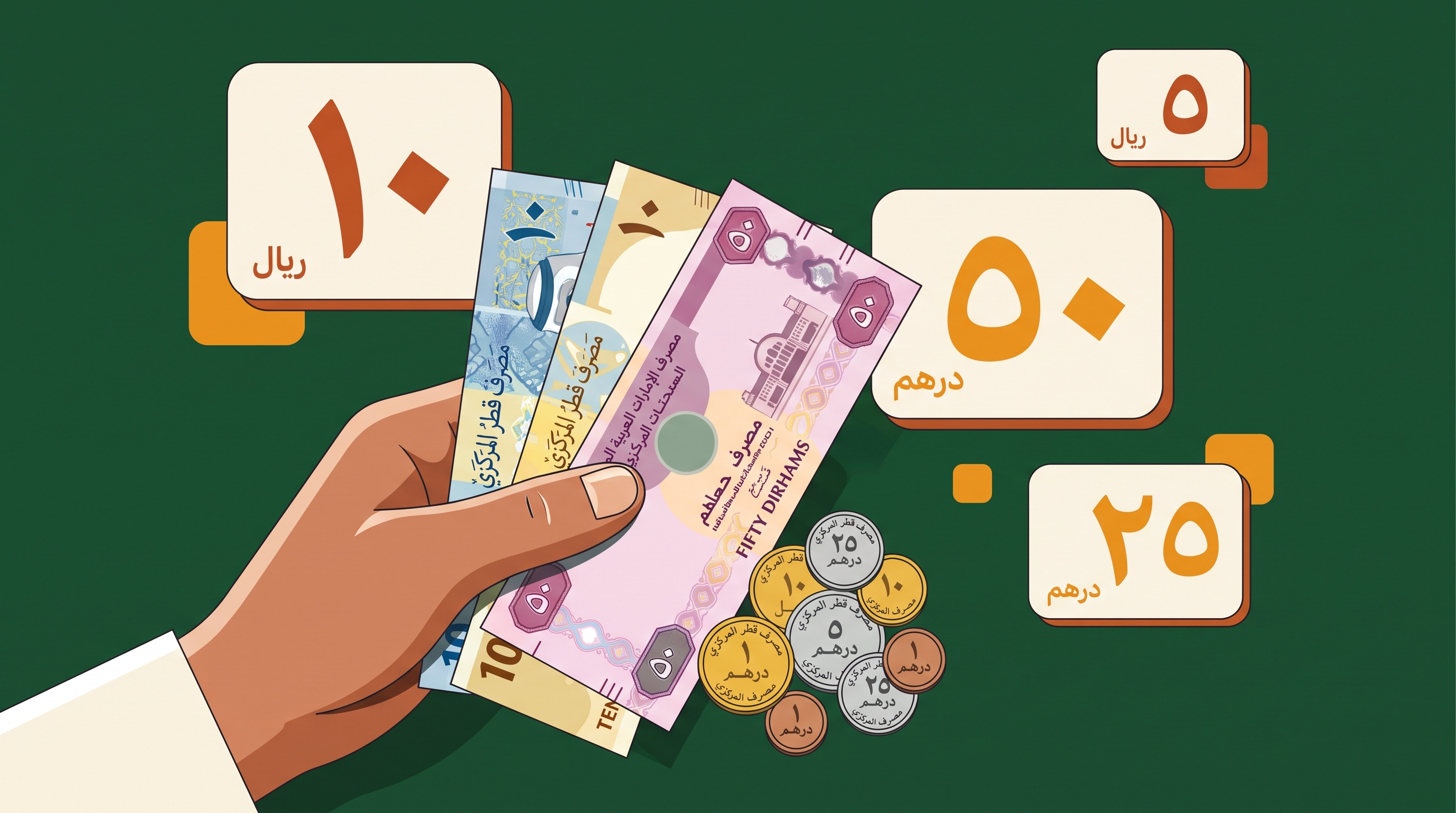
Combine numbers with the local currency and a few value words, and you can handle any transaction with confidence:
- kam? — how much?
- riyal / dirham — the local currency
- fils / halala — the small coins
- ghali — expensive
- rakhees — cheap
- al-baqi — the change
- cash / bitaqa — cash / card
Putting it together at the shop
In real life, numbers rarely come alone — they come inside a quick exchange. Practising short, whole interactions is far more useful than reciting numbers in order. For example: you ask bikam hadha? (how much is this?), you hear khamseen riyal (fifty riyal), you reply ghali shwayya (a little expensive), and you settle on a price. Learning numbers inside these mini-conversations is what makes them stick.
The fastest way to make numbers automatic
Numbers need to be instant — you cannot count slowly in your head while a shopkeeper waits. The only way to get there is repetition out loud until they come without thinking. An AI voice tutor like YalloTutor is perfect for this: you can practise numbers and prices inside real spoken conversations, hear them at natural speed, and drill them until they are automatic. Spend a few minutes a day and within a couple of weeks prices will stop being a guessing game.
Practice speaking Arabic today
YalloTutor is your personal AI voice tutor. Have real conversations, hear the pronunciation, and see every phrase written out — right on your phone.
Get the app