There has never been more choice for learning Arabic. You can join a traditional class, buy a self-study app, hire a private tutor, work through a textbook, or — the newest option — practice with an AI voice tutor. With so many paths, it is hard to know where to put your time and money. So let us cut through the noise: for a busy expat whose real goal is to speak Arabic in daily life, which method actually works best? This article compares the main options honestly, including their weaknesses.
Traditional classes
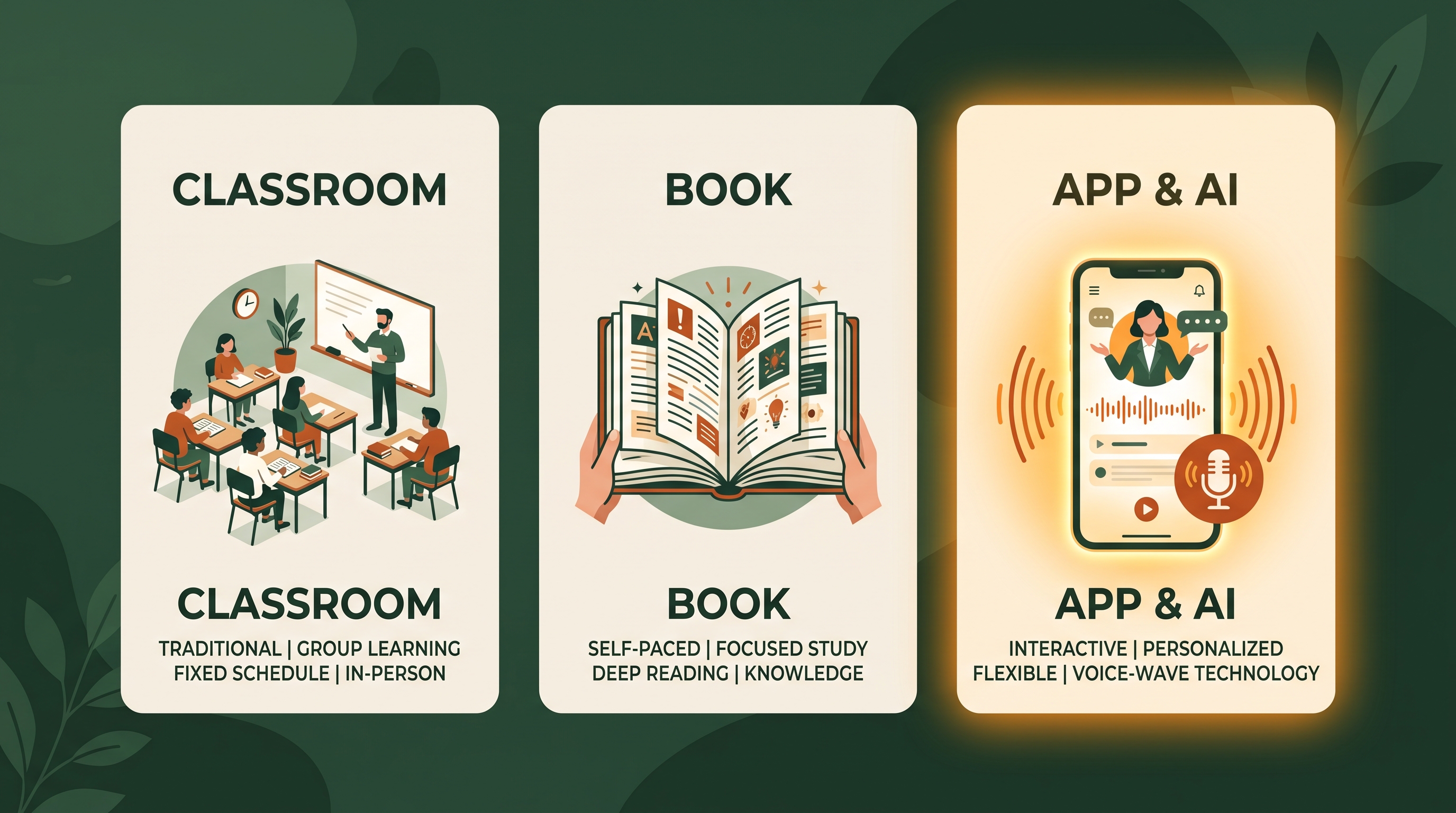
Classes give you structure, a real teacher and a group to learn with, which some people find motivating. But they come with real downsides for a working expat: they are expensive, they run on a fixed schedule that rarely fits shift work, and they often spend a lot of time on grammar and writing rather than the practical speaking you actually need. If your week is unpredictable, missing classes quickly undoes your progress.
Textbooks and self-study
Books are cheap and thorough, and good for people who enjoy studying. But they are passive: reading about Arabic, filling in exercises and memorizing tables is simply not the same as speaking. Many learners finish a whole book and still freeze the moment they need to say something out loud, because they never practised the actual skill of speaking.
Traditional learning apps
Popular apps are excellent for building vocabulary and keeping a daily streak, and they are convenient. Their weakness is conversation: tapping answers and matching words trains recognition, not the ability to hold a real, unpredictable spoken exchange. They are a useful supplement, but on their own they rarely get people speaking confidently.
AI voice tutors
AI voice tutors are the option that changes the picture, because they target the exact skill the others miss: speaking. You talk out loud in real conversations, hear natural pronunciation, get corrected gently, and practice the real situations you actually face — any time, day or night, for a fraction of the cost of a human tutor. They combine the best of each other method: the speaking focus of a private tutor, the convenience of an app, and the flexibility to fit any schedule.
So which is best?
The honest answer depends on your goal. If you want to read and write formal Arabic deeply, a class or textbook still has a place. But if your goal is what most expats want — to speak confidently in daily life, fast, around a busy job — then in 2026 an AI voice tutor is the most effective, flexible and affordable path, ideally with an app for vocabulary on the side.
This is exactly what YalloTutor is built for: real spoken Gulf Arabic practice, on your phone, whenever you have a few minutes. It is the closest thing to having a patient personal tutor in your pocket — which, for busy expats, is the fastest way to go from studying Arabic to actually speaking it.
Practice speaking Arabic today
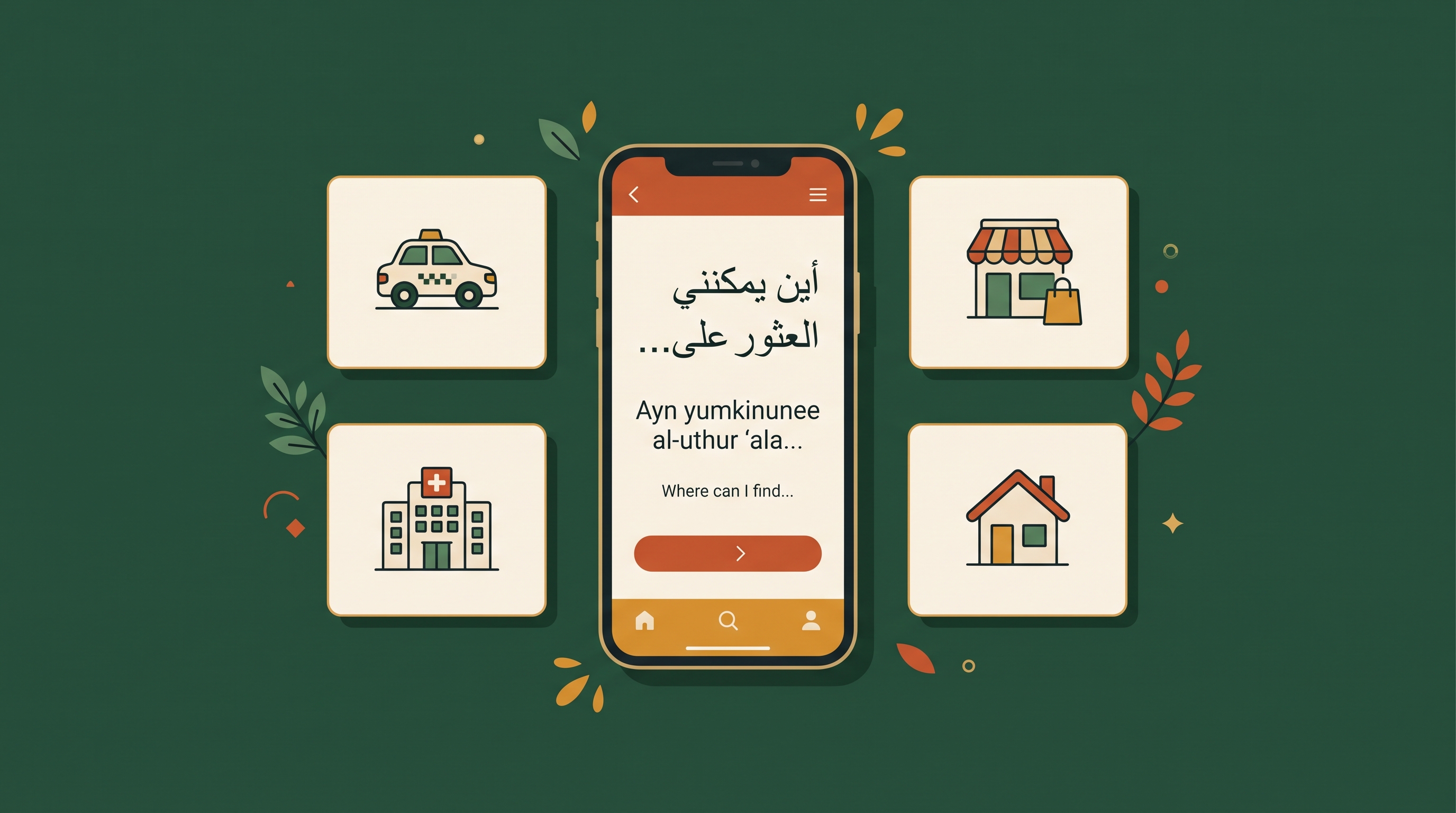
YalloTutor is your personal AI voice tutor. Have real conversations, hear the pronunciation, and see every phrase written out — right on your phone.
Get the app